
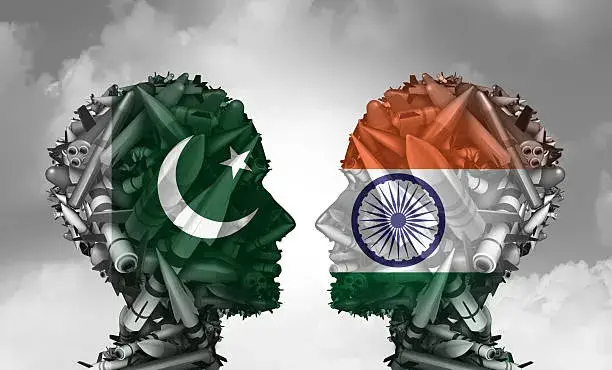
How RAW was built from scratch and played a decisive role in India’s biggest strategic victory in 1971.

By the mid-1960s, India had started to understand that what it was facing was not a series of isolated incidents. There was a pattern forming, and the country was often reacting too late. The wars of 1962 and 1965 made this painfully clear. Information was delayed, threats were underestimated, and decisions were taken without complete clarity.
India needed to change how it operated. Not by reacting harder, but by thinking ahead. This led to the creation of the Research and Analysis Wing in 1968.
It didn’t begin with massive resources or a large structure. The team was small, the budget was limited, and the infrastructure was basic. But it had a clear purpose to gather intelligence beyond India’s borders and understand threats before they reached the country.
RAW started quietly, building networks and establishing information channels in neighboring regions. Over time, it developed the ability to track developments more accurately and respond with better clarity. For the first time, India had a system that could look outward instead of just inward.
The real test came in 1971.
At that time, Pakistan was divided into two parts West Pakistan and East Pakistan. The political situation in East Pakistan was unstable, especially after the 1970 elections where Sheikh Mujibur Rahman’s party won a clear majority. However, power was not transferred, which led to widespread unrest.
The situation quickly escalated. Violence broke out, and large numbers of people began fleeing into India. The crisis was no longer limited to Pakistan. It had become India’s problem too.
This time, India was not unprepared.
RAW had already been monitoring the situation closely. Support systems were quietly built. Local resistance groups were trained and organized. Intelligence was collected and structured in a way that could guide decisions effectively.
So when the war officially began, India was not reacting blindly. It had clarity and direction.
The outcome reflected that preparation. East Pakistan broke away and became Bangladesh. Over 90,000 Pakistani soldiers surrendered, marking one of the largest surrenders in modern history.
This was not just a military victory. It was a strategic outcome shaped heavily by intelligence.
For the first time, India had moved from reacting to events to influencing them. But victories like this don’t end conflicts. They change them.
For Pakistan, 1971 was not the end it was a turning point that pushed it towards a different kind of strategy, one that would unfold in the years that followed.
👉 Continue reading in Part 3: After 1971 — Proxy Wars, Kashmir, And The Conflict That Never Ended




Leave a Reply