
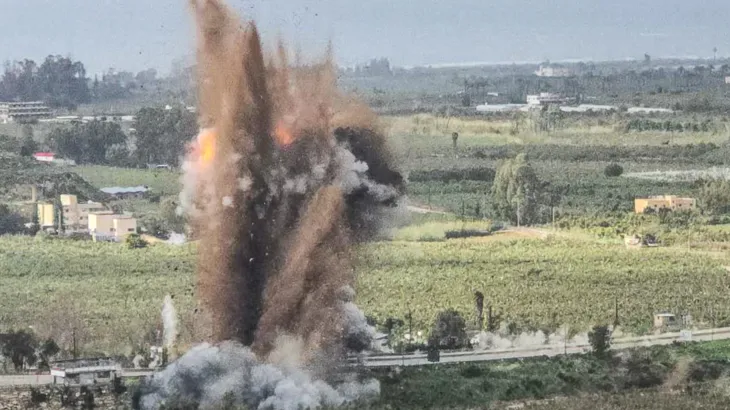

In the last few days, the Middle East conflict has crossed a line that experts have long feared the direct targeting of energy infrastructure. What was earlier a military confrontation has now turned into something far bigger: a war with the potential to reshape global energy markets, economies, and geopolitical alliances for years.
The turning point came when Israel launched a strike on Iran’s South Pars gas field, the largest natural gas reserve in the world. This was not just another strategic hit. South Pars is central to Iran’s economy and a critical component of global energy supply chains. The attack damaged key processing facilities, halted operations at multiple refineries, and disrupted a significant portion of Iran’s gas production.
More importantly, this marked the first time in the conflict that upstream energy production itself was directly targeted, a move widely seen as a major escalation with long-term consequences.
Iran’s response was swift and calculated. Within hours, Tehran signalled retaliation not just against Israel, but against energy infrastructure across the Gulf. Missile and drone strikes reportedly hit facilities linked to Qatar, Saudi Arabia, and other regional players, widening the conflict beyond bilateral lines and pulling the entire region closer to instability.
This escalation has immediate global consequences. Energy markets reacted almost instantly, with oil and gas prices surging amid fears of prolonged disruption. The Gulf region is not just another energy hub it is the backbone of global fuel supply. Any sustained instability here affects everything from electricity generation in Europe to industrial production in Asia. Even short-term damage to infrastructure like Qatar’s LNG facilities has already reduced export capacity significantly, with recovery expected to take years.
What makes this situation more dangerous is the strategic nature of the targets. Attacking gas fields and export hubs is not just about military advantage it is about economic pressure. Energy has effectively become a weapon, and the battlefield now extends far beyond borders. Businesses that rely on petrochemical inputs, transportation, and fuel-intensive processes are already feeling the impact, with rising costs and supply uncertainty beginning to ripple through global markets.
At the same time, political signals from global leaders suggest a lack of unified control over the escalation. Conflicting statements from U.S. and Israeli leadership about the coordination of the strikes highlight underlying tensions even among allies, raising questions about how controlled or uncontrolled this conflict has become.
The bigger concern now is duration. This is no longer about a single strike or retaliation cycle. Once energy infrastructure becomes a target, the conflict tends to sustain itself because every new disruption invites another response. The risk is not just a wider war, but a prolonged one, where economic damage accumulates over time.
For the rest of the world, the implications are unavoidable. Rising fuel costs, supply chain disruptions, inflationary pressure, and industrial slowdowns are not distant possibilities they are already beginning. From large economies to small manufacturers, the effects of this conflict are likely to be felt far beyond the Middle East.
This moment may well be remembered as the point where the conflict stopped being regional and became global in impact. Because when energy becomes the battlefield, no country remains untouched.




Leave a Reply